

Low-temperature Processing: A Determinant of Superior Digestibility in Fish Meal and Meat-and-bone Meal
Temperature exerts a profound influence on the digestibility of protein-rich feed ingredients, notably fish meal and meat-and-bone meal (including meat meal). Low-temperature production methodologies have been empirically validated to preserve nutritional efficacy, particularly in terms of protein digestibility, as corroborated by experimental data and industrial applications.
1. Fish Meal: Digestibility Optimization via Low-temperature Drying
1.1 Correlation Between Drying Temperature and Digestibility
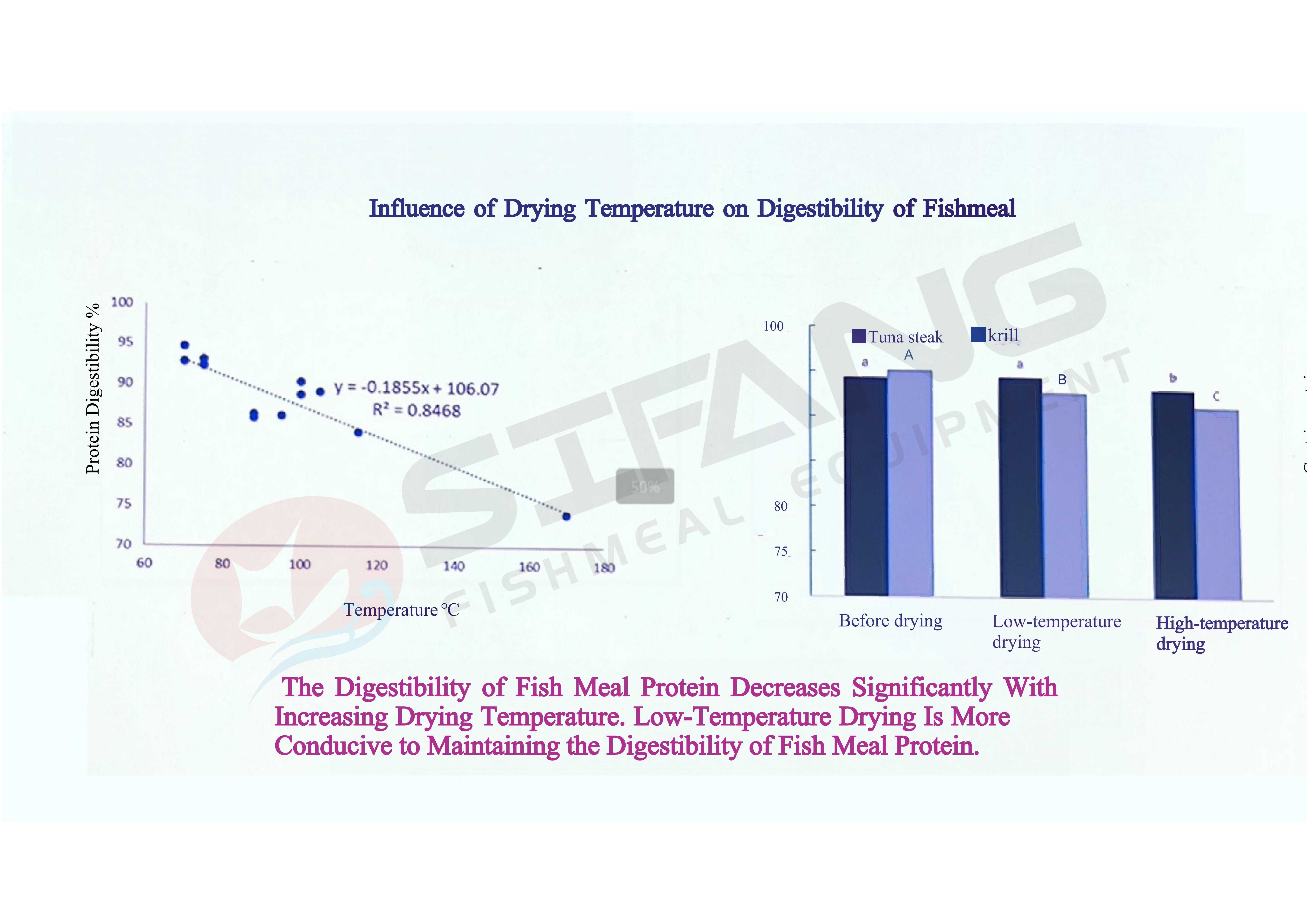
As illustrated in the inaugural set of graphical data, fish meal’s protein digestibility exhibits a robust negative linear correlation with drying temperature (fitting equation: y=−0.1855x+106.07, R2=0.8468). Concurrently, pepsin digestibility—a critical metric for assessing protein bioavailability—for substrates such as tuna steak and krill was found to be significantly elevated in low-temperature dried and pre-drying cohorts relative to the high-temperature dried group (exceeding 90% vs. below 90%, respectively). These observations conclusively demonstrate: elevated drying temperatures are inversely proportional to fish meal protein digestibility, thereby underscoring the indispensability of low-temperature drying in preserving optimal digestibility.
1.2 Processual and Productual Disparities
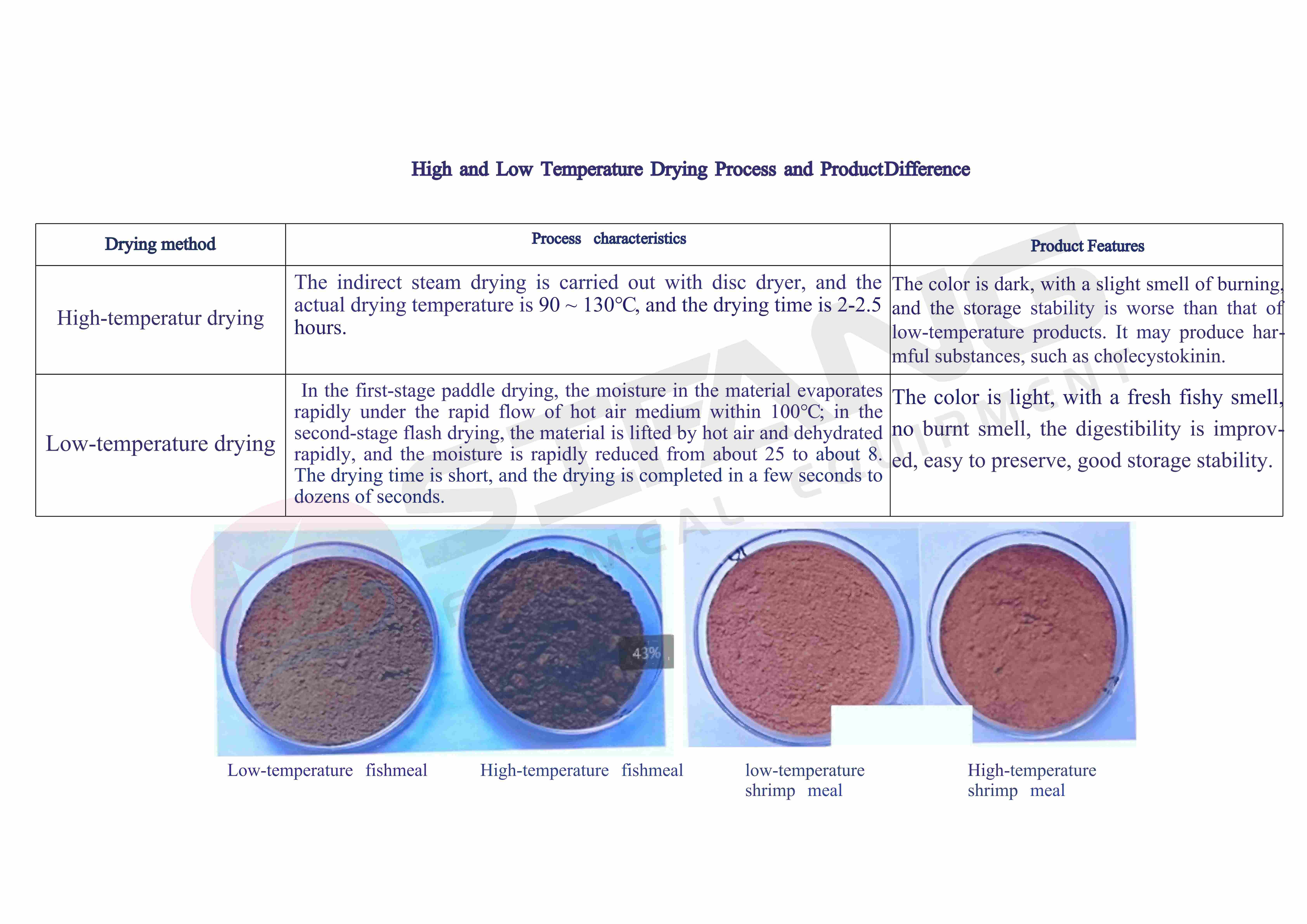
Low-temperature drying regimens (e.g., paddle drying coupled with flash drying, executed within tens of seconds at temperatures below 100℃) yield fish meal characterized by:
- A lighter chromatic profile, a fresh fishy aroma, and the absence of scorched odors;
- Enhanced storage stability and the absence of deleterious byproducts (e.g., gizzard erosive factor).
In stark contrast, high-temperature drying (90–130℃ for 2–2.5 hours) culminates in products with darker hues, compromised storage stability, and potential nutrient degradation.
1.3 Efficacy Validation in Aquatic Animal Feeding Trials
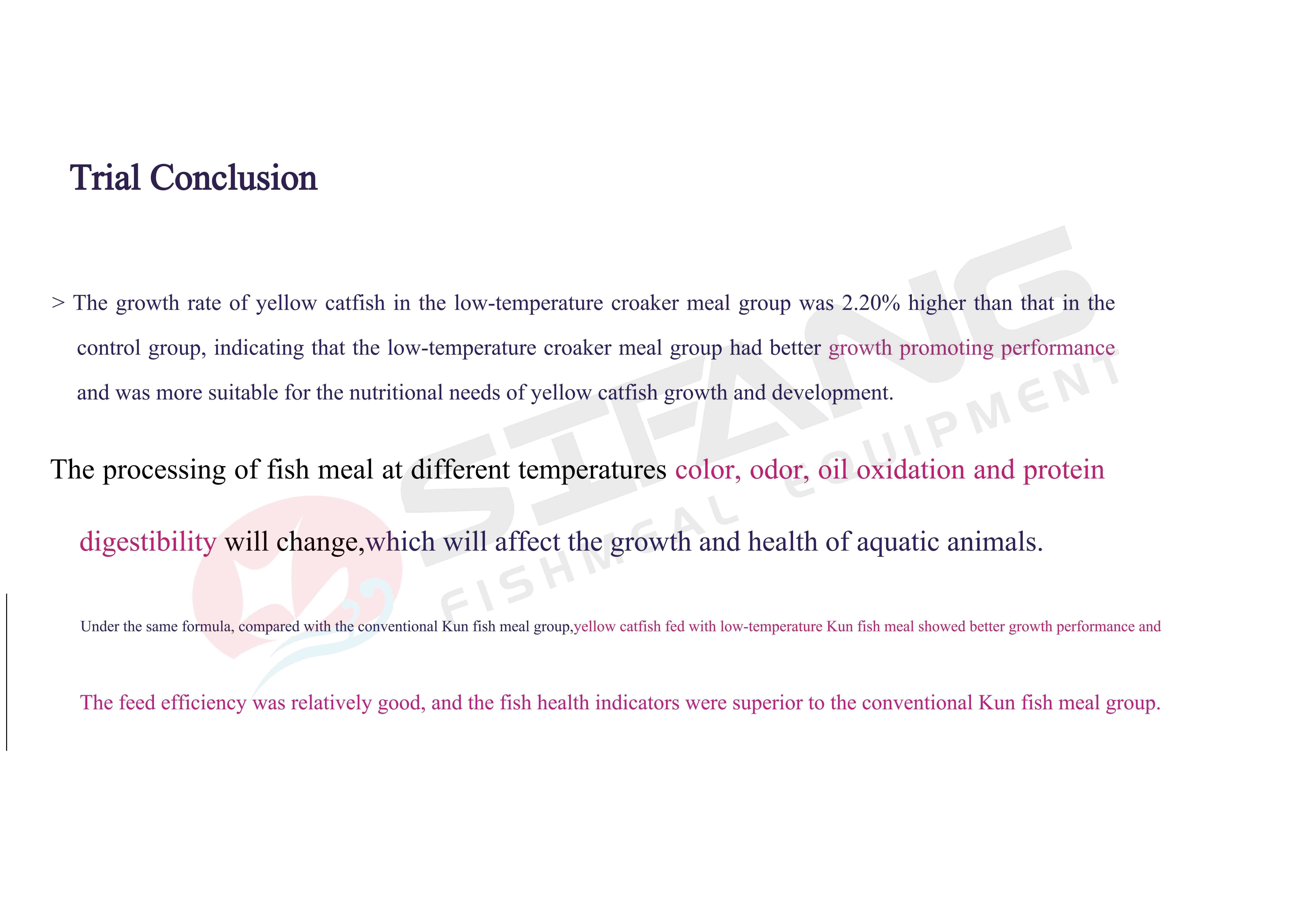
Feeding experiments involving Pelteobagrus fulvidraco (yellow catfish) revealed that low-temperature anchovy meal:
- Augmented growth rates by 2.20% relative to the control group;
- Outperformed conventional fish meal formulations in growth performance, feed conversion efficiency, and key fish health biomarkers.
2. Meat-and-bone Meal & Meat Meal: Wet Processing at ~95℃ as a Driver of Enhanced Digestibility
The digestibility advantages conferred by low-temperature processing are equally applicable to meat-and-bone meal and meat meal. The wet processing method (operating at approximately 95℃) demonstrates distinct superiority over the dry processing method (operating at approximately 140℃) through:
- Mitigation of Protein Denaturation: Elevated temperatures inherent to dry processing induce excessive protein denaturation, effectively “sequestering” nutrients and diminishing their accessibility to digestive enzymes. Conversely, the wet process at 95℃ minimizes structural alterations to proteins, thereby preserving the integrity of essential amino acids (e.g., lysine).
- Digestibility and Feed Utilization Efficiency: Elevated digestibility translates to more complete nutrient assimilation by animals, reducing excretory waste and improving feed conversion ratios—an outcome analogous to the benefits observed in low-temperature fish meal.
3. Concluding Remarks
Low-temperature processing emerges as a pivotal technology for enhancing digestibility in both fish meal and meat-and-bone meal/meat meal:
- In the context of fish meal, low-temperature drying sustains high levels of protein and pepsin digestibility, which directly translates to improved growth and health outcomes in aquatic species.
- For meat-and-bone meal and meat meal, the wet processing methodology at ~95℃ delivers demonstrably superior digestibility relative to the dry process at 140℃, attributable to reduced protein denaturation and preserved nutritional bioavailability.
These findings underscore low-temperature technology as a cornerstone in the production of high-quality, highly digestible feed ingredients, thereby advancing the field of animal nutrition.